HOME RENEWABLE ENERGY
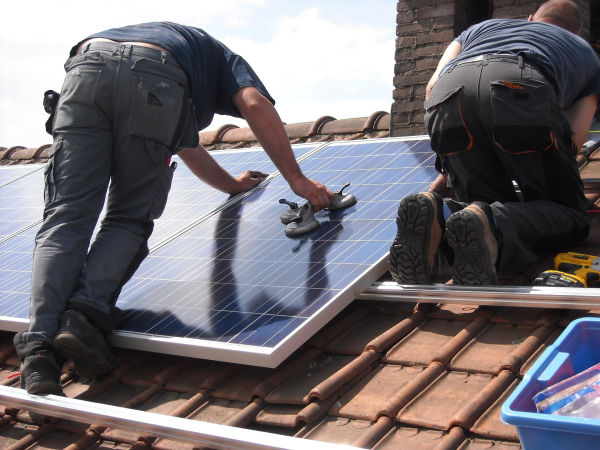
The vast majority of home renewable energy projects in the U.S are roof-installed solar panels. All of the electricity produced by solar panel systems is fossil-fuel emissions-free: solar power is clean, renewable energy source. A 5 kilowatt system, which is around the average residential installation size in the United States, will produce roughly 150,000 kilowatt-hours (kWh) of emissions-free electricity in its lifetime. That’s equivalent to over 110 tons CO2.
Solar energy for your home is now cheaper than ever. The price of installed solar panels has plummeted over the past decade to an all-time low price of an average of $2.50 per watt. While the overall cost of a solar panel system will be higher up front compared to carbon offsets [see right], you’ll see savings over the lifetime of the system because of the savings over paying for your electricity from the grid. And you will not be offsetting fossil fuels; you’ll be generating your own clean energy!
* Solar Cost Calculator. If you buy a solar panel system outright, your typical “break even” point (also known as your payback period) in the U.S. is probably between six and eight years. Depending on how you finance your purchase, you could start seeing savings from day one – $0-down solar loans and solar leases are widely available for solar-interested homeowners. You can use the following website to calculate your potential solar panel costs and savings. This calculator will estimate your solar potential and savings by address. Estimates are based on your roof size, electricity bill, and actual offers in your area.
ENERGY SAGE SOLAR CALCULATOR
Nearly every U.S. community has a nearby solar power contractor that can provide your home with this renewable form of electric production. Check the internet for local solar contractors or ask any neighbors who you see that already have solar panels installed.
* Solar Installer Check. You can also compare the best offers from solar installers near you by using the following website, funded by the U.S. Department of Energy. This website aggregates multiple solar quotes for you, calculates the financial merits of each offer, and then presents them back to you in an easy-to-understand format. People who use EnergySage generally save $5,000 to $10,000 as compared to those who only work with a single installer.
ENERGY SAGE SOLAR INSTALLER CHECK
* Solar rebates and incentives. There are many, many state, local, and federal programs in place to help offset the initial cost of installing solar panels on your home’s roof. Current legislation provides a 26 percent tax credit for residential solar installations through 2022, dropping to 22 percent through 2023. These incentives include rebates, tax breaks, and subsidies.. Below is a link to an excellent source for detailed information for the solar [and other renewable energy] credits that are available in your state. Simply enter your Zip code into the site’s search bar and find out all of the solar credits and subsidies that you may qualify for: [Note: this website also has detailed information about many other state and federal incentives for energy efficiency and conservation, for example: wind energy, home appliance efficiency tax credits, electric vehicles, efficient HVAC, and many more.]
DATABASE OF STATE INCENTIVES FOR RENEWABLE ENERGY
* CONSIDER INVESTING IN YOUR CHILDREN’S OR GRANDCHILDREN’S ROOFTOP HOME SOLAR ARRAY.
An excellent way to pass on some of your own personal wealth, if possible, is to purchase a rooftop solar system for your kids or grandkids. Currently, a couple can each provide a tax-free gift of up to $15,000.00 per person to each of your children or grandkids annually, often more than enough to purchase and have installed a solar energy system for your offspring if they own their own home. This is truly an investment in your children’s future.

RENEWABLE ENERGY BILL OFFSETS
Wind power is the major renewable energy source behind renewable energy electric bill offsets. This type of carbon offset refers to a reduction in greenhouse emissions – or an increase in carbon storage [through land restoration or the planting of trees] that is used to compensate for emissions that occur in the production of electricity.
However, you should know the difference between Renewable Energy Certificates (RECs) and Carbon Offsets. RECs are a measure of power generation, merely a certificate that a measured volume of renewable energy has been produced. However, RECs do not actually offset emissions, meaning RECs are just “business as usual” for the energy producer. Carbon Offsets, on the other hand, are a measure of CO2-equivalent emissions that have been permanently reduced or eliminated through various projects. Carbon Offsets always represent real removals of carbon dioxide from the atmosphere or avoided emissions somewhere in the world, which means they have to show that the emission reduction wouldn’t have happened without the project.
There are many available programs through which you can offset your own individual carbon emissions by purchasing carbon offsets. Here are a few of the best:
* MyClimate, a Swiss non-profit, offers an excellent program of projects to reduce emissions by replacing fossil energy sources with renewable energy or by promoting energy-efficient technologies
MY CLIMATE CARBON OFFSET PROGRAM
* CLEAR CARBON OFFSETS are an excellent choice for reducing the carbon emission from your home energy use. Their program is OAS-certified, which is only awarded to carbon offsets that are independently audited to the highest standards every year.
CLEAR HOME ENERGY CARBON OFFSETS
* TERRAPASS CARBON OFFSETS also provides an excellent program to offset your individual energy use emissions. They offer one-time or monthly subscription programs to purchase carbon offsets.
TERRAPASS CARBON OFFSETS
COMMUNITY SOLAR
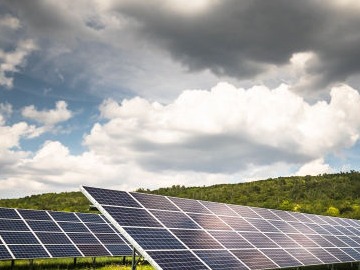
Community solar projects are a relatively new form of providing electric customers with a source of renewable energy. A community solar project is a large, central solar power array, whose electricity is shared by more many home owners, often far from the site of the solar array. You receive credit on your electricity bills for the power produced from your portion of a solar array, offsetting your electricity costs. Generally, you can save 5-10% off of your annual electricity costs by joining a community solar project. Unlike rooftop solar, you don’t need to own your property to take advantage of community solar [you just need an electric bill.] Many community solar programs have no subscription fee and are easy to opt-out of. Plus, you don’t need to install or maintain any equipment on your property. You will be joining with others to access the actual solar electric energy produced by a particular solar project. To date, there are community solar projects in 41 states. However, some of the projects are fully enrolled and are accepting no new enrollees at this time. Thus, community solar projects are only available in certain states. For residents of Illinois, Maine, Maryland, Massachusetts, Minnesota, New Jersey, New York, and Oregon [with projects coming soon in Colorado, Delaware, New Mexico, Pennsylvania, Virginia, and Washington state] use the following website:
COMMON ENERGY COMMUNITY SOLAR
For residents of certain communities in California, Colorado, Illinois, Maine, Maryland, Massachusetts, Minnesota, New Jersey, New York, Oregon, Rhode Island, and Washington DC: Here is a site to find community solar projects near you [Note: Residents of other states can use this site’s zip code locater to see if there are new solar projects available to join in your area]:
ENERGY SAGE COMMUNITY SOLAR
SHARE THIS PAGE!